
Skip to content
Back to Insights

Corporate & Events 6 MIN READ

The Israeli Roadshow: Getting Founders to Investors When Flights Are Restricted

75% of Israeli startups report flight restrictions affecting operations. They raised $8.6 billion in the first half of 2026 anyway. Here's how.

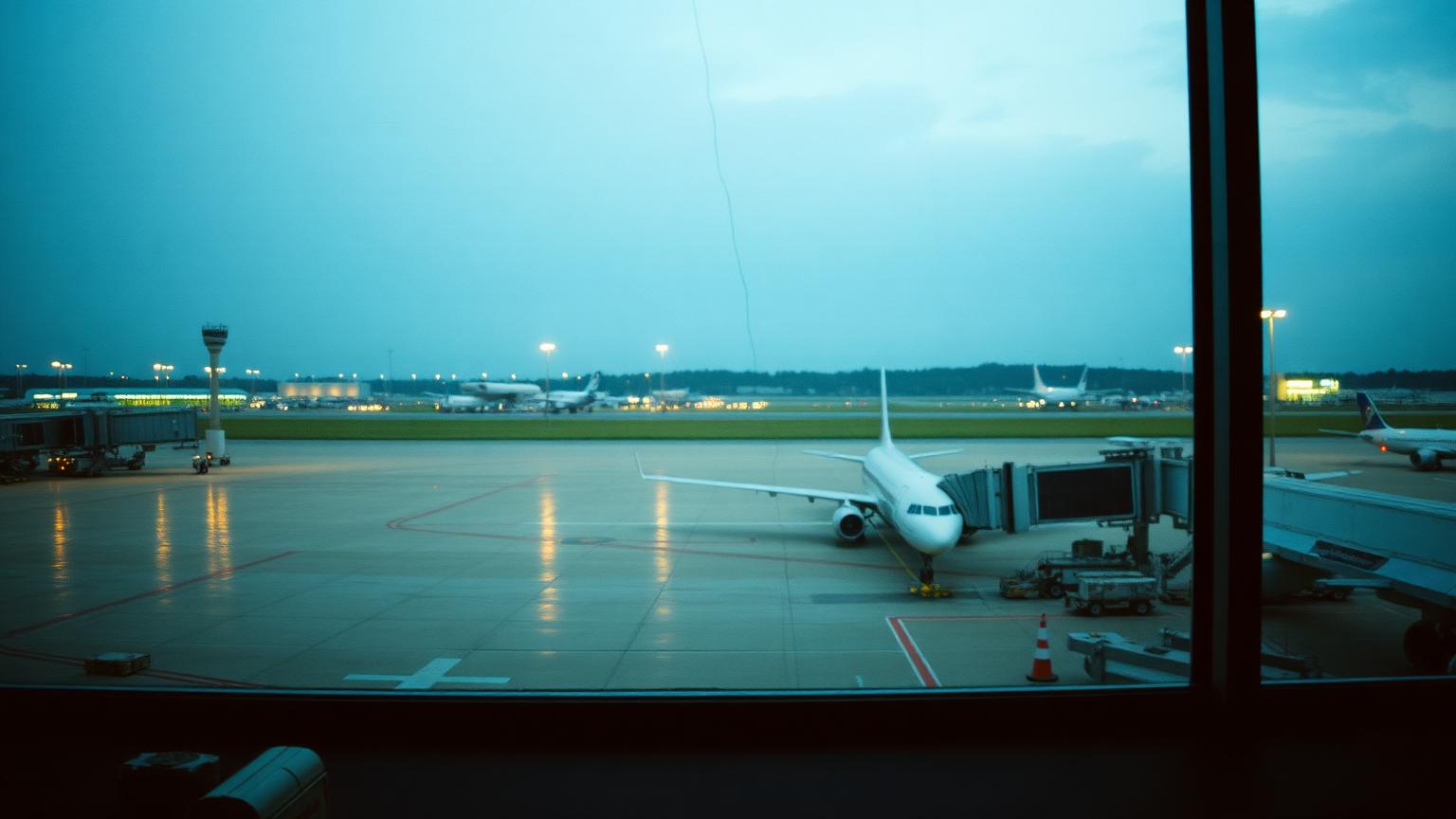
An airport apron seen through a rain-streaked terminal window at dusk, aircraft parked and nothing moving.
40An apron with nothing moving - backup routing already live before the notice lands.

$8.6B

Raised by Israeli startups in H1 2026 [1]

75%

Startups reporting flight restrictions affecting operations [2]

71%

Startups reporting fundraising hit due to war [2]

+45%

Year-over-year growth in funds raised [1]

Your startup just closed a $15M Series A. The lead investor is in London. The co-investors are in Geneva and New York. Your CEO needs to be in all three cities next week for investor update meetings, plus a conference in Miami. The roadmap is set. The flights are booked.

Then the airspace changes. An escalation in the region leads three airlines to suspend Tel Aviv routes overnight. The flight on Tuesday morning is cancelled. The meeting in London on Tuesday afternoon is now at risk. The investor in Geneva is flying to Singapore on Wednesday. If you miss Tuesday, you miss the round.

This is not a hypothetical. This is what Israeli founders have been navigating since October 2023 - and it's why ground operations, not booking platforms, have become the critical infrastructure for Israeli tech companies raising money abroad.

The Israeli Fundraising Reality

Israeli tech fundraising (2026 data)

Raised in H1 2026$8.6 billion
Year-over-year growth+45%
Number of funding rounds (H1 2026)129
Startups reporting flight restrictions affecting operations75%
Startups reporting fundraising hit due to war71%
Strongest January since 2022$1B+ raised

Israeli startups raised $8.6 billion in the first half of 2026 - a 45% increase year-over-year, despite ongoing conflict [1]. The ecosystem is resilient. The founders are still traveling. The capital is still flowing. But the logistics of getting a founder from Tel Aviv to London, Geneva, and New York are harder than they've ever been.

Seventy-five percent of Israeli startups report that restrictions on international flights are affecting their operations [2]. Seventy-one percent report that the war has hit their fundraising [2]. The founders who are closing rounds are the ones who have figured out how to move despite the constraints.

The Airspace Problem

Israel airspace disruption (2024-2026)

Airline suspensions

What changedOngoing since Oct 2024

Impact on travelMultiple carriers suspend or reduce TLV routes

Route changes

What changedLonger legs on affected corridors

Impact on travelFlight times increased 1-3 hours

Airspace avoidance

What changedCarriers plan around closed sectors

Impact on travelSome reroute via Cyprus or the Red Sea corridor

Border restrictions

What changedNeighbouring airspace intermittently closed

Impact on travelBackup routings need checking on the day

GBTA projection

What changedRegional forecast for 2026

Impact on travelMiddle East business travel -12.3% [4]

The airspace doesn't close permanently - it changes. Airlines suspend, reduce, or reroute routes to Tel Aviv with little warning. A flight that was available on Monday may not be available on Wednesday. The 4-hour direct to London becomes a 7-hour routing via Larnaca. The founder who planned to be in a 14:00 meeting in London is now arriving at 22:00.

What Founders Are Actually Doing

The founders who are closing rounds aren't waiting for the airspace to stabilize. They're building contingency into every trip:

The Israeli founder's travel playbook

1 h

Via Larnaca - full European connectivity when TLV direct is unavailable

Cyprus

3 h

Via Amman - drive, then full international connectivity

Land leg

TLV-DXB

Via Dubai - consistent service, connect to Asia or the US

Emirates

×2

Book two flights on different carriers, cancel the one that doesn't operate

Redundancy

Plan for double travel time: a 4-hour direct becomes 7-8 hours

Schedule

+1 day

Arrive the day before the meeting, not the morning of

Buffer

Pre-cut

Car, route and hotel confirmed before landing in London

Ground

The playbook is not about finding the cheapest route. It's about finding a route that actually operates, landing with ground logistics already in place, and building enough buffer that an airspace change doesn't cascade into a missed meeting.

The Cost of a Missed Investor Meeting

Cost of founder travel failure

Rebooking at last minutePremium routing$2,000$6,000
Extra hotel nightBuffer day not planned$400$800
Emergency ground transportLanding in the wrong city$200$500
Lost day of founder timeOpportunity cost$5,000$15,000
Missed investor meetingLost commitment, potentially $1M-$10M+ - off this scale$1M$10M+

For a founder raising a $15M round, one missed meeting can be the difference between closing and not closing. The investor's schedule doesn't move because a founder's flight was cancelled. The investor goes to Singapore. The round goes to another company.

How GCS Runs Israeli Founder Travel

GCS founder travel protocol

  1. AlwaysMonitor airspace and airline status for TLV
  2. Pre-tripHold backup routing via Larnaca, Amman, or Dubai
  3. Pre-tripPre-book ground at destination - car, hotel, meeting venue
  4. Night beforeIssue run sheet with primary and backup flights
  5. On the dayTrack actual flight status
  6. NextIf primary cancelled: activate backup, adjust ground at destination
  7. +30 minFounder informed of the change and updated run sheet sent
  8. Last legFile stays open until the founder is home

The protocol isn't about booking flights. It's about holding options. The desk monitors airspace continuously, holds a backup routing before the trip starts, and activates it as soon as the primary route fails. The founder never calls the airline. The founder calls the desk. The desk re-cuts the plan.

The Bottom Line

Israeli startups raised $8.6 billion in the first half of 2026. The founders who closed those rounds were the ones who showed up - in London, in Geneva, in New York - despite airspace changes, flight cancellations, and a war at home.

The difference between a founder who closes and a founder who doesn't isn't the pitch. It's whether they were in the room. And being in the room, when your airspace keeps changing, requires a partner who monitors the sky, holds the backup, and re-cuts the plan before the meeting is missed.

GCS field deskWritten from the run sheet

Questions we get asked

Can't the founder just rebook through the airline app?
They can - if the airline is operating. The problem isn't rebooking. It's knowing which airlines are still flying to Tel Aviv, which routes are still open, and what the backup looks like when the primary is cancelled. A founder managing their own rebooking at 2 AM is not preparing for a 10 AM investor meeting. The desk handles the rebooking. The founder prepares for the pitch.
How far in advance do you plan founder travel?
Ideally a week. The desk assesses airspace, identifies primary and backup routings, pre-books ground at every destination, and issues a run sheet the night before. For last-minute trips - common in fundraising - the desk can stand up in 24-48 hours with reduced lead time on ground coordination.
What if the founder needs to go somewhere the backup routing doesn't cover?
The desk doesn't just hold one backup. It holds a primary route (direct, if available), a secondary route (via Larnaca, Amman, or Dubai), and a tertiary option (charter or connecting through a second hub). Three options, one desk, one call.
How do you handle the ground at the destination when the flight changes?
The desk re-cuts the ground in real time. If the founder is landing 4 hours late in London, the desk moves the car, pushes the hotel, and reschedules what can be rescheduled. What can't be rescheduled - the investor meeting - is protected by the buffer day that was built into the itinerary.
Does this only apply to fundraising travel?
No. The same protocol applies to any Israeli executive travel that involves a critical meeting - board meetings, client meetings, conference keynotes, or government delegations. Any trip where showing up is non-negotiable needs the same level of contingency planning.

Sources

  1. Israel's Tech Sector Raises $8.6 Billion in First Half of 2026, Calcalist Tech / Jerusalem Post, Jul 2026. +45% YoY growth, 129 funding rounds. jpost.com
  2. War Strains Israeli Tech: 71% of Startups Report Fundraising Hit, Calcalist Tech, 2026. 75% report flight restrictions affecting operations. calcalistech.com
  3. Israeli High-Tech Started 2026 with Notable Momentum, Israel Innovation Authority, Feb 2026. $1B+ raised in January 2026, strongest since 2022. facebook.com
  4. Global Business Travel Spending Forecast, GBTA, 2026. Middle East business travel -12.3% for 2026.

Figures last checked: August 2026

The desk

If the airspace changed tonight - would your founder still make the meeting tomorrow?

Book a free consultation. We'll review your next investor trip and build the backup routing your current travel program doesn't have.

GCS deskAnswered day or night · 24/7Every way to reach us