
Skip to content
Back to Insights

Delegations & protocol 7 MIN READ

Protocol Is a Checklist, Not a Courtesy

Precedence is not etiquette. It is written into treaty law, and the order of a receiving line is decided before anybody walks through the door.

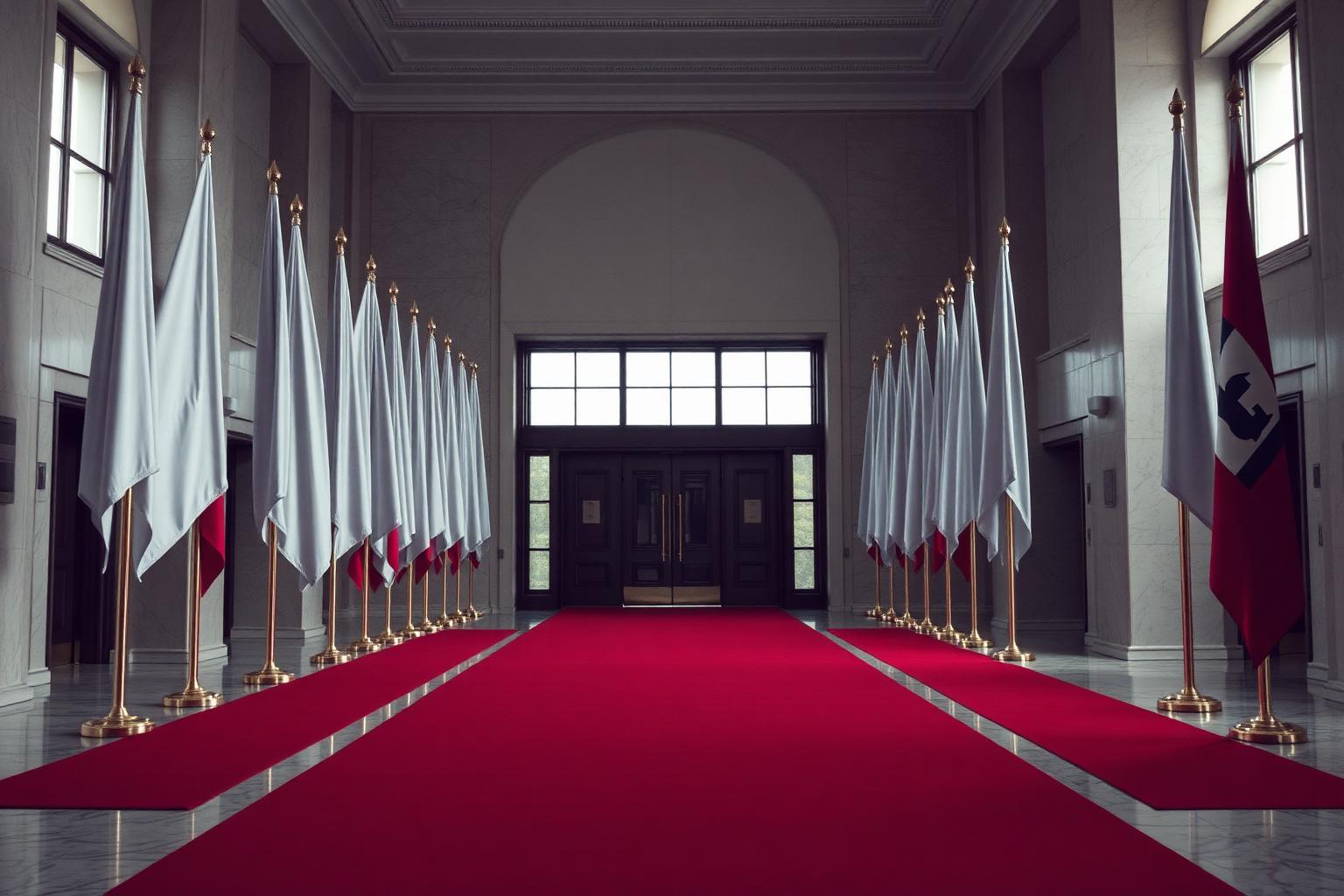
A line of flagpoles standing in order beside an empty carpet runner before a formal arrival.
48Flags and an empty carpet before a delegation arrives - the order decided in advance.

1961

Vienna Convention on Diplomatic Relations, adopted 18 April [1]

1964

Entered into force, 24 April [1]

3orders

Precedence, flag order and seating - decided before arrival

1desk

Who owns the run sheet on the day

A foreign delegation lands for a two-day visit. Nine people, three cars, one formal arrival, one signing, one dinner. Everything is booked.

At the arrival, the host greets the wrong member of the delegation first. The flags are in the wrong order. The head of mission is seated below a junior official at dinner. Nothing illegal has happened. Nobody is injured. The visit is still damaged, and the damage is remembered longer than the agenda.

Protocol failures are not rudeness. They are unhandled logistics.

Diplomatic precedence is not invented per event. The Vienna Convention on Diplomatic Relations, done at Vienna on 18 April 1961 and in force since 24 April 1964, sets out how heads of mission are classed and how precedence within each class is taken - in the order of presentation of credentials [1]. Everything a host improvises on the day is either consistent with that framework or visibly not.

What actually has to be decided in advance

The protocol sheet: decided before the delegation lands

ItemOrder of precedenceDecided byRank and credentials, per the conventionFailure if left to the dayWrong person greeted first
ItemFlag order and numberDecided byHost convention, confirmed with the missionFailure if left to the dayFlags reordered in front of cameras
ItemReceiving lineDecided byHost principal, then named greetersFailure if left to the dayDelegation walks past an empty line
ItemVehicle orderDecided byPrincipal car, security, staff, baggageFailure if left to the dayPrincipal arrives after their own staff
ItemArrival pointDecided byWhich door, which lift, which floorFailure if left to the dayDelegation enters through the service corridor
ItemSeating planDecided byPrecedence, then language pairsFailure if left to the dayHead of mission below a junior official
ItemInterpretationDecided byLanguage pairs, booth or consecutiveFailure if left to the dayTwo people speaking at once
ItemPhotographyDecided byWhere, when, who is in frameFailure if left to the dayCamera in the middle of a private word

Eight decisions. None of them expensive. All of them irreversible once the delegation is through the door.

The motorcade is a timing problem

A motorcade looks like a security arrangement. Operationally it is a timing arrangement: the point of the vehicle order is that the right person reaches the right door at the right moment, with the greeting party already in place - not walking out as the car pulls up.

Improvised arrival versus a protocol run sheet

Greeting partyImprovisedAssembles when the cars are seenRun sheetIn place four minutes before arrival
Car orderImprovisedWhichever car is readyRun sheetFixed, printed, briefed to each driver
EntranceImprovisedMain door by defaultRun sheetNamed door, lift held, route walked in advance
FlagsImprovisedWhatever the venue ownsRun sheetCount and order confirmed with the mission
InterpretersImprovisedIntroduced on the spotRun sheetBriefed, positioned, language pairs assigned
If it slipsImprovisedEveryone waits visiblyRun sheetDesk re-cuts the timing, greeters told before the delegation sees it

What a host desk owns on the day

  • One run sheet, in both delegations' working languages, issued the night before.
  • One named person at each threshold: aircraft door, terminal, forecourt, venue entrance, room.
  • Vehicle order and driver names printed, briefed and confirmed by the drivers themselves.
  • A written seating plan the venue cannot quietly change.
  • A single number that the visiting mission's own staff can call - not the host's switchboard.

The bottom line

Protocol is not a matter of taste. Precedence has a legal frame [1]; the rest is logistics with an audience. Write the eight decisions down before the delegation lands, give one desk the run sheet, and the visit is remembered for what was agreed in the room.

GCS field deskWritten from the run sheet

Questions we get asked

Do you set protocol, or follow it?
We follow the host's convention and the visiting mission's requirements, and we make sure both are written down and agreed before the day. Where they conflict, we get it resolved in advance rather than on the pavement.
Who confirms flag order?
The host's protocol office where one exists, otherwise the visiting mission. We do not guess, and we do not accept the venue's stock arrangement without confirmation.
Can you work alongside a government protocol office?
That is the normal case. The state office owns ceremony and security; we own ground, timing, rooms, interpretation and the parts of the visit that fall outside the official programme.
What about the private side of a delegation visit?
Family programme, dining, medical needs, gifts and departures run on the same run sheet, handled by the same desk, so the private half of the visit does not collide with the formal half.

Sources

  1. Vienna Convention on Diplomatic Relations, done at Vienna 18 April 1961, entered into force 24 April 1964 (United Nations, Treaty Series, vol. 500, p. 95). Classes of heads of mission and precedence by order of presentation of credentials. legal.un.org
  2. GCS operational practice, 2026: protocol sheet, threshold owners and vehicle order for delegation visits.

Figures last checked: August 2026

The desk

Who decides the order of your receiving line - you, the venue, or nobody?

Send us the programme. We will return a protocol sheet with precedence, flag order, vehicle order and thresholds, before anyone lands.

GCS deskAnswered day or night · 24/7Every way to reach us
Read next
Series: Hosting a delegation

Precedence, flag order and the first thirty minutes on the forecourt - written down before anybody lands.